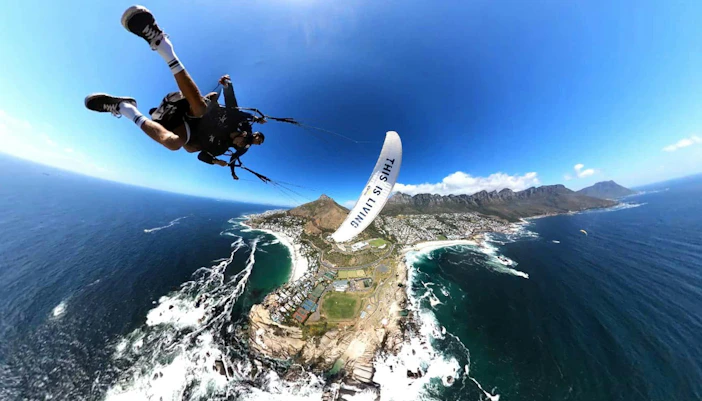
Flights on the current Headout experience run year-round, but only in safe flying conditions. Wind strength, visibility, rain, and low cloud can all delay or cancel takeoff. Day-of standby is normal in this activity, and if conditions do not improve and you cannot reschedule, a full refund applies.
What is Cape Town tandem paragliding?
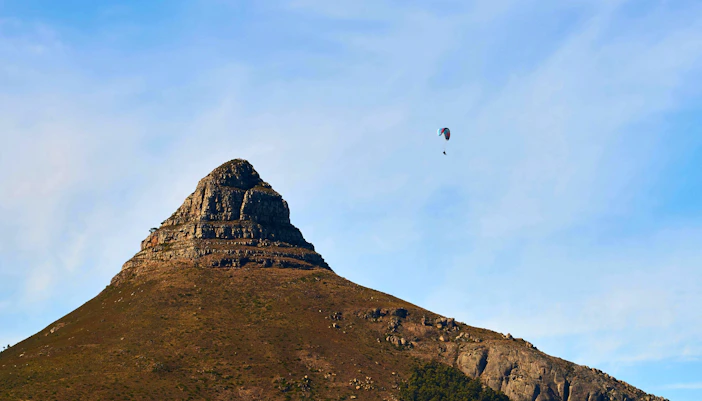
This is a tandem free-flight activity where you fly with an instructor rather than learn to paraglide on your own. In Cape Town, flights are launched from Signal Hill or Lion’s Head depending on wind direction, then land lower down near Sea Point or Clifton. On the current Headout experience, the full activity is planned at around 1 hour, although airtime itself is shorter and weather-led. What makes this experience distinct is how close it is to the city center: you are not driving hours to a remote launch, but stepping off an urban hillside into a short glide with Table Mountain, the Atlantic, and the coastline all in view. This guide helps you understand that setup before you book.
Why try Cape Town paragliding?
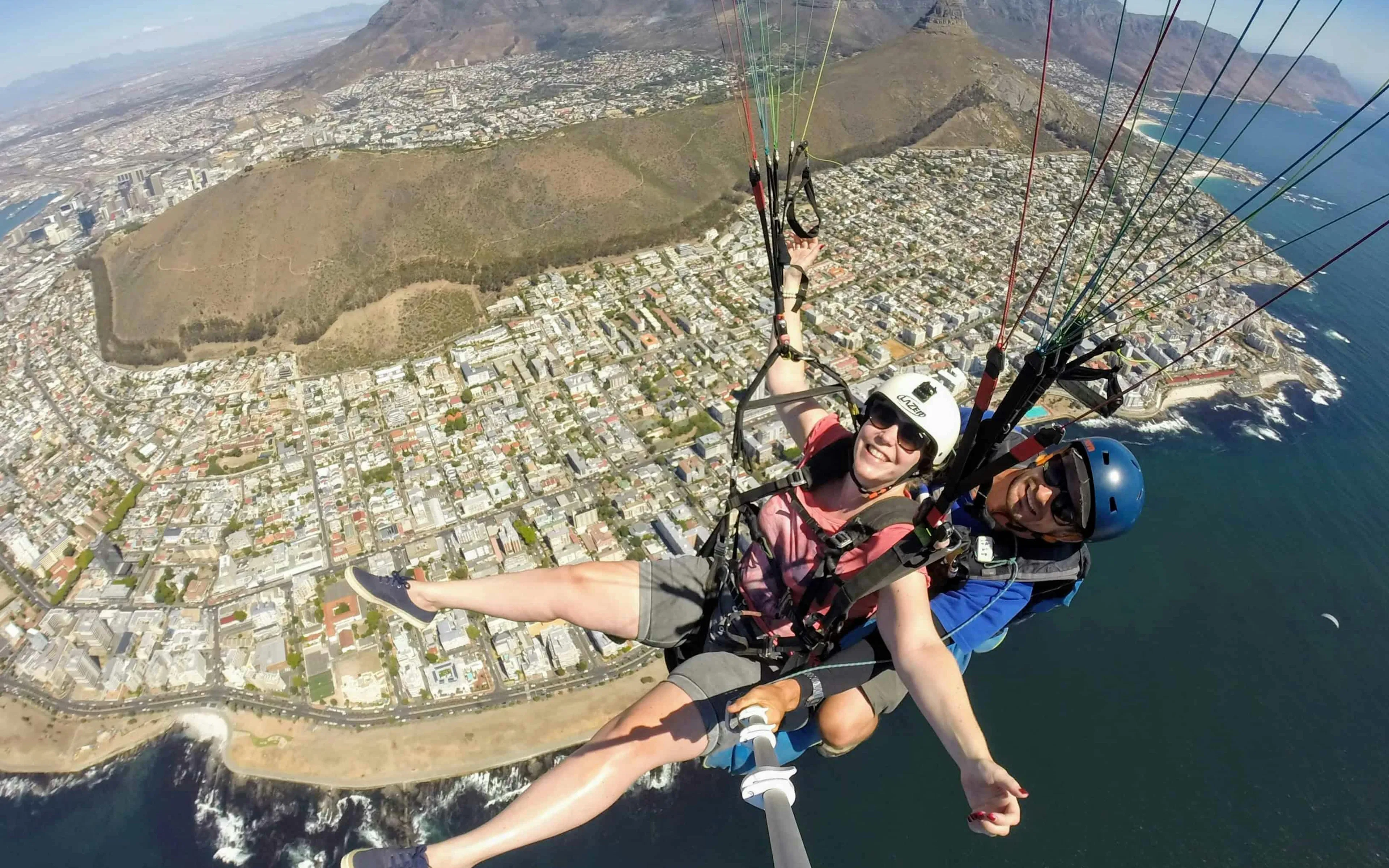
1/4
You launch above the city, not outside it
Within minutes of central Cape Town, you move from a hilltop briefing area into open air above the Atlantic-facing edge of the city. The setting feels urban and coastal at the same time.
The pilot handles the technical flying
You are clipped into a tandem harness with an experienced instructor, so you do not need prior free-flight experience. Your job is simple: listen during briefing, run when told, and settle into the harness.
The landing zones keep the scenery varied
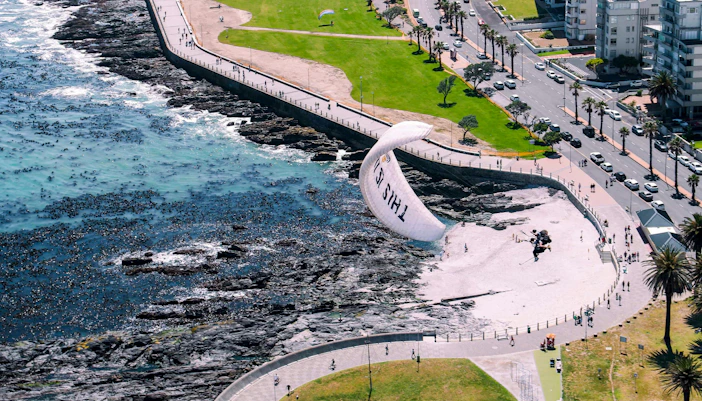
Signal Hill flights commonly land near Sea Point, while Lion’s Head flights can land near Clifton. That means your glide ends at street-and-beach level, not back on the mountain.
Flight time is short and weather-led
This is not a long guaranteed airtime product. If you want a compact scenic glide, it fits well; if you want a fixed-length adventure, book it early in your trip so weather does not box you in.
Plan your Cape Town paragliding experience
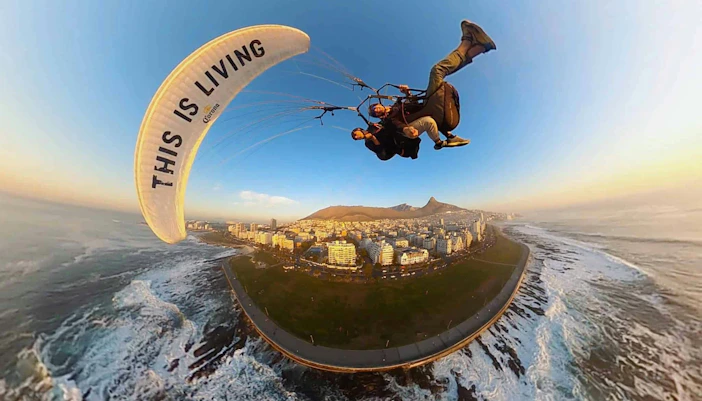
Conditions and seasons
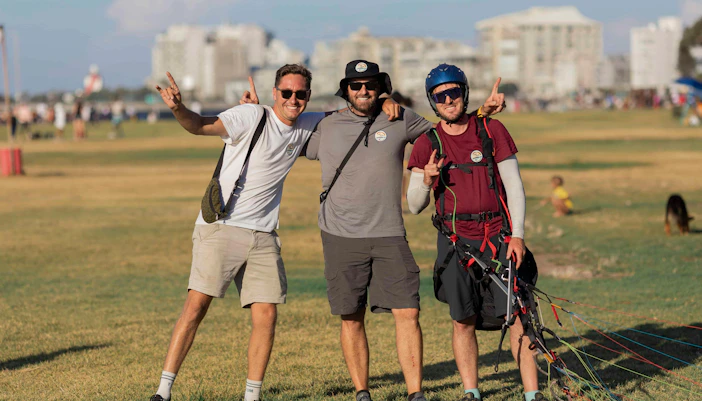
Best window to go
Book in the first part of your Cape Town stay, ideally between November and March, when outdoor demand is strongest and flying conditions are more consistently usable. October and April are the better alternative if you want slightly quieter travel periods without shifting into the more weather-variable winter pattern.
Getting there
The usual meeting area is Signal Hill, a short rideshare from the City Bowl, Sea Point, or Camps Bay, though launch may switch to Lion’s Head if the wind suits it better. Signal Hill flights land opposite Winchester Mansions Hotel in Sea Point, while Lion’s Head flights land in front of The Bungalow in Clifton. The current Headout ticket includes transportation back to Signal Hill after landing.
[Google Maps link] [Directions page]
What happens on the day
The weather call and check-in
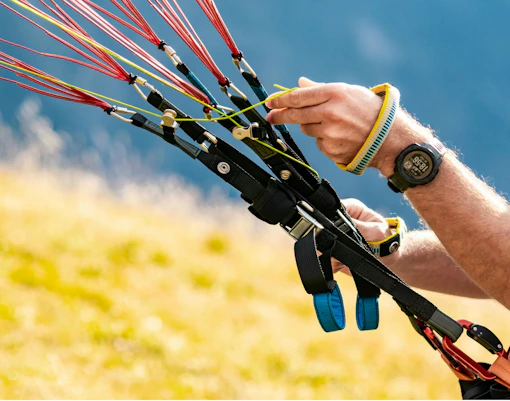
You arrive at the meeting point, complete the waiver, and wait for the pilot team to confirm whether the wind is suitable and which launch site is working best. This is the safety filter that makes the flight possible. If the hill goes on standby, treat your booking time as a weather window rather than a strict departure minute.
Harness fitting and the briefing
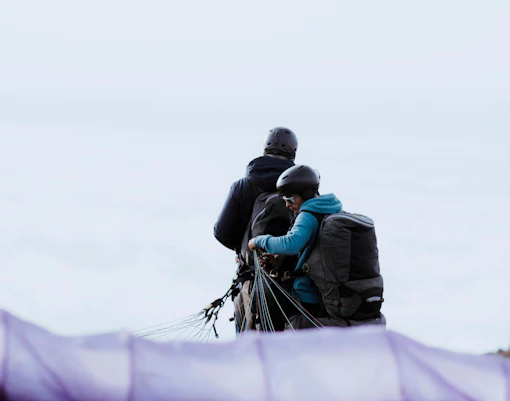
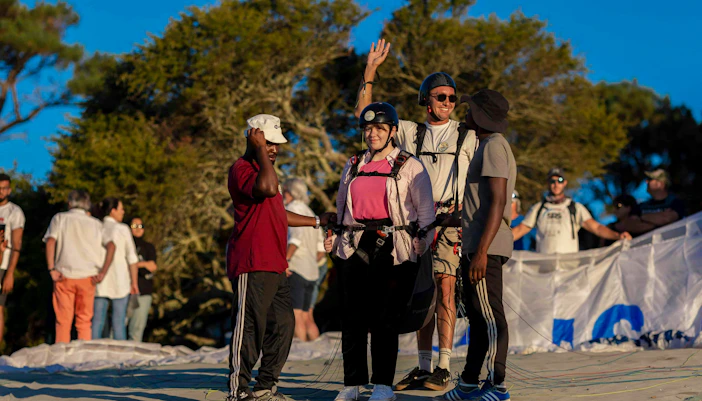
Once your pilot is ready, you are fitted with a helmet and tandem harness and given a short briefing on takeoff posture, where to place your hands, and what to do once airborne. The briefing is practical rather than technical. You do not need to understand wing control; you need to understand the first few seconds on launch.
The launch run and takeoff
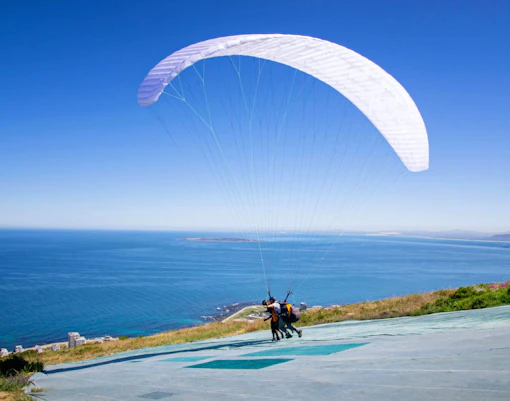
Takeoff is a short run, not a jump. You move forward with the pilot until the wing loads cleanly, then the ground drops away faster than most first-timers expect. The sensation is lift rather than freefall. This is where closed running shoes matter: you need grip and a comfortable stride for those first steps.
The landing and ride back
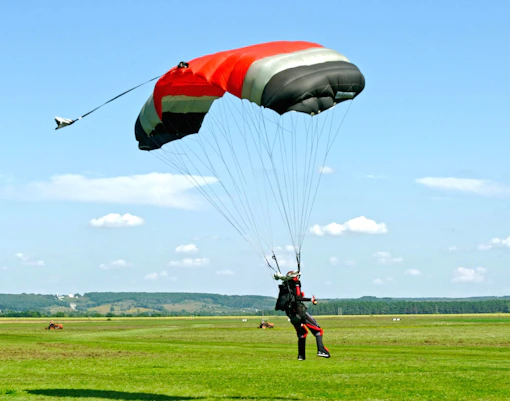
Landing happens lower down near the coast, with the pilot calling the final instructions as you approach the ground. Depending on conditions, you may land near Sea Point or Clifton. The current Headout experience includes transportation back to Signal Hill, which makes the separated launch-and-landing logistics much easier if you are not traveling with your own car.
What you need to know about paragliding in Cape Town
Cape Town’s tandem flights work because the city has usable launch slopes directly above built-up coastal neighborhoods, with Signal Hill used most often and Lion’s Head used when wind direction allows. That detail changes how you read the experience: site choice is an operational safety decision, not a premium scenic upgrade. Tandem flights here are structured as instructor-led flights, with the pilot managing launch, wing control, and landing while weather determines whether the session runs at all. Once you understand that wind is the organizing principle, the late go-or-no-go call and short but efficient glide make much more sense on the day.
What to know before you book your Cape Town paragliding experience
Need to know
- The current Headout flight is for guests aged 14+ and sets hard limits of 110kg and 2.2m.
- You need closed running shoes and enough mobility to take a few brisk steps on launch; sandals are a poor fit even in summer.
- Your instructor, helmet, harness, and transportation back to Signal Hill are included. HD photos and videos are not included and are sold separately on the day.
Worth knowing
- Spectators can watch takeoff from Signal Hill or Lion’s Head, or wait at the landing zone, so this works well even if only 1 person in your group is flying.
- If you want footage, decide early. The flight is short and your hands are occupied during launch and landing, so self-documenting is not practical.
Frequently asked questions
It is closer to a quiet glide than a freefall. You launch on foot with an instructor and stay suspended under a wing, so the feeling is lift and float rather than a drop.
Yes. Spectators can watch the takeoff from Signal Hill or Lion’s Head, or wait at the landing area in Sea Point or Clifton. The current flight also includes your ride back to Signal Hill afterward. Learn more here. [Getting there guide]
Groups can book the same session, but tandem paragliding still means 1 passenger per instructor. Flights may launch one after another rather than side by side because each wing needs its own safe wind window.
The important point is that takeoff is not a jump. You follow the pilot’s running instructions, and if confidence or conditions are wrong before launch, the team can stop rather than push the flight through. [What happens on the day]
Not on the current experience. HD photos and videos are available as a paid add-on on the day, which matters because the flight is short and you will not realistically film launch and landing yourself.
If you are buying this for long instructional airtime, probably not. If you are buying it for a compact aerial view of Cape Town’s mountain-and-ocean edge, many first-timers still find the payoff strong.
Age matters less than mobility and harness fit. The current flight starts at age 14, and the main practical test is whether you can manage the launch and landing steps safely.
More Reads
Not applicable
Cape Town Paragliding Tickets
Cape Town Paragliding Weather and Cancellations